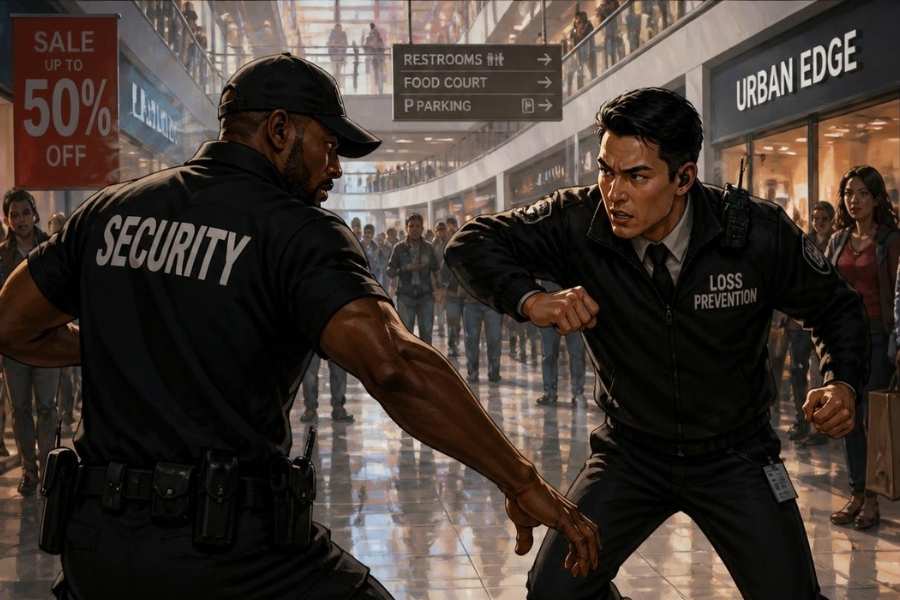

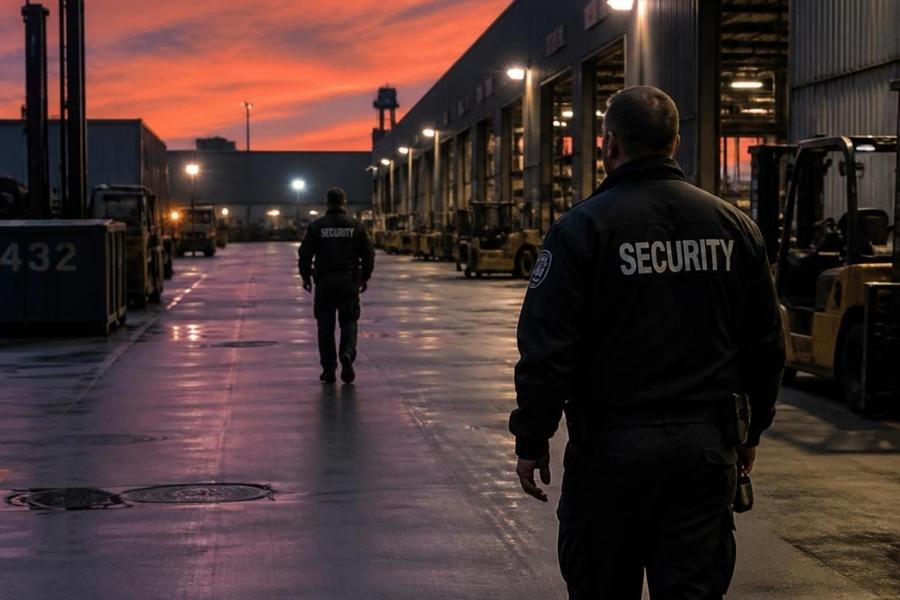
A warehouse or manufacturing floor is a different security problem than a retail store or office. The risks are bigger high-value inventory, heavy equipment, large open floor plans, multiple shipping doors and the operating hours often never stop. Getting security wrong here doesn’t just mean a stolen item; it can mean a shut-down production line or a lost contract. Warehouse security guards can help protect your people, inventory, and operations keeping your business secure and running smoothly.
We provide dedicated warehouse security guards and industrial security guards across Alberta, and the sites that stay secure long-term are the ones where security is built around the actual flow of goods, not bolted on as an afterthought.
In this guide, you’ll learn the biggest security risks warehouses and plants actually face, how access gets controlled at loading docks, how guards work alongside existing safety protocols, and whether your site needs a fixed post or roving coverage.
What are the biggest security risks in warehouses and plants?
Industrial sites face a different risk mix than most other property types. Internal theft employees or contractors moving product out through legitimate-looking channels is often a bigger loss driver than external break-ins. Large open floor plans and multiple entry points make unauthorized access hard to catch without dedicated coverage. And high-value equipment or raw materials sitting in staging areas overnight are an obvious target if the site isn’t monitored.
Warehouses and manufacturing plants face the highest risk from internal theft through legitimate-looking channels, unauthorized access through multiple loading and personnel doors, and unmonitored staging areas holding high-value inventory overnight. A security plan that only watches the perimeter misses most of this.
How is access controlled at loading docks and shipping areas?
Loading docks are the busiest and riskiest part of most industrial sites trucks, drivers, and product moving constantly, often from multiple carriers in a single day. Controlling this well means verifying every driver and shipment against a manifest before product moves, logging arrival and departure times, and restricting dock access to designated personnel rather than leaving it open to anyone on-site.
Loading dock access control involves verifying driver identity and shipment manifests before goods move, logging every arrival and departure, and physically restricting dock areas to authorized personnel and scheduled deliveries only. Guards stationed at or near the dock catch discrepancies a shipment that doesn’t match the paperwork, a driver who isn’t who they claim to be before they become a loss.
How do guards coordinate with existing safety protocols?
Industrial sites almost always already have workplace safety protocols in place PPE requirements, restricted machinery zones, lockout/tagout procedures. Security guards working these environments need to be trained on those protocols, not just general security duties, so they can move through the facility safely and recognize when a safety violation is also a security concern (an unauthorized person in a restricted machinery zone, for example).
warehouse security Guards working industrial sites should be trained on the facility’s existing safety protocols PPE requirements, restricted zones, and emergency procedures so security patrols support rather than conflict with day-to-day operations. This coordination is typically established during onboarding with the client’s safety or operations manager.
Should you choose a fixed post or roving patrol coverage?
The right model depends on the site’s layout and risk concentration. A fixed post makes sense at a single high-traffic point like a main entrance or loading dock, where continuous presence matters most. Roving patrol makes more sense for large facilities with multiple lower-traffic areas that each need periodic checks rather than constant staffing at every point.
Fixed-post guards suit single high-risk access points needing continuous coverage, while roving patrols suit large facilities where risk is spread across multiple areas that each need periodic — not constant — attention. Many industrial sites use a combination: a fixed guard at the main dock plus a roving patrol covering the rest of the floor and perimeter.
Conclusion
Industrial security isn’t one-size-fits-all — the right plan depends on your floor plan, shift patterns, and where your actual loss risk concentrates.
Ready to secure your warehouse or manufacturing site? Get a free quote from Alpine Protection Services or call +1 780-800-9903.
About Alpine Protection Services: Alpine Protection Services provides trained warehouse and industrial security guards across Alberta, coordinating closely with each facility’s existing safety and operations protocols. Learn more about our Warehouse Security services.
Frequently Asked Questions About Warehouse & Manufacturing Security
1. Why do warehouses need security guards?
Warehouses face risks such as theft, unauthorized access, equipment loss, and shipment discrepancies. Trained security guards can monitor access points, patrol the facility, and help protect inventory and operations.
2. What do warehouse security guards do?
Warehouse security guards monitor entrances, loading docks, shipping areas, and perimeter zones. They can verify authorized personnel, check deliveries, conduct patrols, and report suspicious activity.
3. How do security guards protect loading docks?
Guards can verify driver information, check shipment details, and monitor arrivals and departures. Controlling access to loading areas helps reduce unauthorized activity and shipment-related losses.
4. Should I use fixed-post or roving security guards?
Fixed-post guards work well at high-risk locations such as main entrances or loading docks. Roving guards are better suited to larger facilities where multiple areas require regular checks.
5. Can security guards work alongside warehouse safety procedures?
Yes. Guards should understand the site’s safety rules, including PPE requirements, restricted areas, and emergency procedures. Proper coordination allows security activities to support daily warehouse operations.
6. Do manufacturing facilities need 24/7 security?
The need for continuous coverage depends on the facility’s operating hours, risk level, inventory value, and access points. A professional security assessment can help determine whether 24/7, scheduled, fixed-post, or roving coverage is appropriate.