
One of the first questions clients ask before hiring a surveillance camera installation is how many Security cameras do I need? Too few and they aren’t working; too many and you are spending money on equipment and monitoring that is not needed.
We’ll design and set up a commercial camera system all throughout Alberta, and the best number is always going to depend on what you are looking for in your specific property it’s not a rule of thumb.
This guide provides practical insights into mapping blind spots before purchasing, estimating how many security cameras different business types may need, understanding resolution vs. field of view, and knowing when security cameras may not be the best approach for your property..
How do you map blind spots before buying cameras?
First, walking the property and identifying all points of access and exit – main doors, side doors, loading docks, ground level windows, parking access points, etc. After determine high-value items or high-risk items, such as cash registers, server rooms, inventory storage, executive offices. Last but not least, make a note of any corners, alcoves or places where the camera’s line of sight is blocked.
Blind spot mapping should be conducted before you look for a provider of a “security camera installation near me,” not after, and involves physically walking the site to determine every entry point, high value area and sightline obstruction. This is the most common mistake in creating a system that ends up with costly gaps.
How many cameras does a retail store, warehouse, or office need?
The number of cameras will vary from property to property and from size to size, but there are reasonable starting points. Small retail shops will require 4-8 cameras entrance, registers, aisles. For a mid size warehouse, you’ll typically require 12-20 for docks, storage rows and perimeter doors. For a typical office, 4–6 are required for the main entrance, reception and parking. Twenty or more may be required for multi-building or large industrial sites.
The number of cameras required varies based on the size of the small business, mid-sized warehouses require 12-20, and large or multi-building sites might need more than 20 the number of cameras required is always determined by how much square footage you have, and the number of entry points and value at risk. Your camera installation quote should describe your particular layout, not offer a generic package.
What’s the trade-off between resolution and field of view?
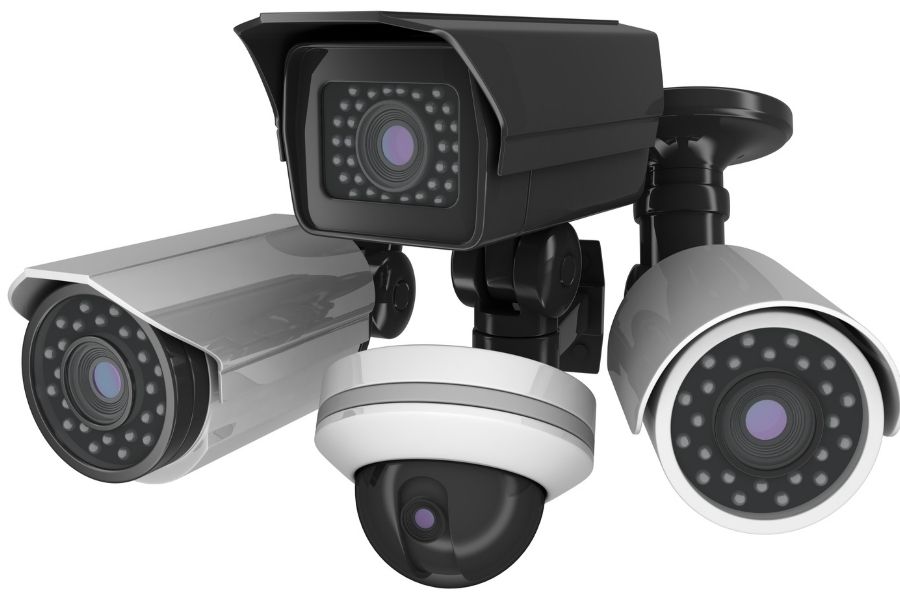
The better the camera’s resolution, the more detail it can record, so a higher resolution will allow you to see a face or license plate, but the range of effectiveness typically is shorter before the image quality dips. The wide angle cameras provide a bigger field of view but have less depth of field. When determining how many security cameras do I need, this balance between resolution, field of view, and camera placement is just as important as the number of cameras installed.
High resolution cameras are ideal for entry points and cash points where identification detail is important, wider angle views are better for large open areas such as parking lots or warehouse floors where activity monitoring is more important than identifying detail. Using a variety of camera types in a particular location, rather than just one type in all locations, generally provides more coverage for the buck.
When should you add cameras vs. add guard patrols instead?
Camera are great for passive and constant coverage and provide a written record of activity. But they do not physically prevent something from continuing — that’s where a guard or mobile patrol are useful, something that cameras are not. With a low traffic zone as indicated on the blind-spot map, a periodic check by a guard or patrol may be more cost effective than installing additional cameras, depending on the situation.
In low-traffic zones where the entire space might be covered by a camera at a higher cost than the risk of being exposed to, a scheduled guard patrol check may be the better option than installing more cameras, and both must be considered together, not as a camera first option.
Now It’s Your Turn
In the end it’s not about purchasing the most cameras that you can afford and it’s about coverage based on the property’s actual layout and risk. Correctly walking through before the installation will save money and actual gaps.
Interested in getting a system estimate without paying up a dime? Schedule a walkthrough with Alpine Protection Services or give us a call at +1 (780) 800-9903 to see if we can help you find the perfect camera installation near me in Edmonton and Alberta.
Alpine Protection Services installs custom surveillance camera systems for Alberta businesses, sized per the physical configuration of the premises and the level of risk. For more information on installation of a surveillance camera system, please read our full Surveillance Camera Installation Guide.
Frequently Asked Questions About Business Security Cameras
1. How many security cameras do I need for my business?
It will depend on your coverage needs, high-risk zones, entrances and property size. For small businesses, 4-8 cameras are sufficient, while warehouses and larger properties could require even more, such as 12-20 cameras or even more.
2. How do I know where to place security cameras?
First, identify areas of potential entry and exit, cash handling, inventory, parking areas, and other high-risk locations. A professional CCTV camera placement guide and coverage assessment can also help detect blind spots, blocked sightlines, and areas that require additional camera coverage.
3. Are more security cameras always better?
Not necessarily. The more cameras, the more the cost of equipment and monitoring, but the less the coverage is beneficial. Its purpose is to cover critical blind spots with the proper number of cameras while ensuring you choose how many security cameras do I need based on your property’s layout, risk areas, and required coverage.
4. What type of camera is best for business security?
The ideal camera will vary based on the location in which it will be used. High resolution cameras are suitable for gateways, cashiers and other enclosed spaces, and large area cameras work well in large open spaces such as warehouses and parking lots.
5. Can security cameras cover every area of my business?
While cameras can offer extensive coverage, they can also have blind spots caused by obstacles, building structures, lighting, and distance. Effective camera coverage planning can help strategically position cameras and minimize these gaps. If you’re wondering how many security cameras do I need, a professional coverage assessment can help determine the right number based on your property’s layout and security needs. If you’re looking to enhance your security,
6. Should I choose security cameras or security guards?
Cameras offer round-the-clock surveillance and footage, and security guards can be on hand to deal with issues and have physical presence on the premises. This combined approach can provide both continuous video coverage and an active security presence, helping businesses determine how many security cameras do I need while addressing areas that may require additional monitoring.